If you've ever been told you snore, or you've woken yourself up gasping for air, it's tempting to write it off as a bad night's sleep. New research suggests it's worth a closer look — and that the conversation about treatment doesn't have to start with a scalpel.
What the new study found
Researchers at University of Chicago Medicine looked at patients with obstructive sleep apnea who received a hypoglossal nerve stimulation implant — sometimes nicknamed a "tongue pacemaker" — a surgical device that keeps the airway open during sleep. Comparing them to patients with sleep apnea who weren't treated with the device, the study found that, starting more than two years after treatment, the implanted group developed new diagnoses of diabetes and high blood pressure at notably lower rates. The findings were published in JAMA Otolaryngology–Head & Neck Surgery and covered by outlets including US News & World Report.
The researchers were careful to note that longer follow-up is still needed to confirm the size of the benefit and to fully explain the biology behind it. But the direction of the finding lines up with something sleep specialists have suspected for years: untreated sleep apnea doesn't just cost you a good night's rest. Over time, it appears to load extra strain onto your heart, blood vessels, and metabolism.
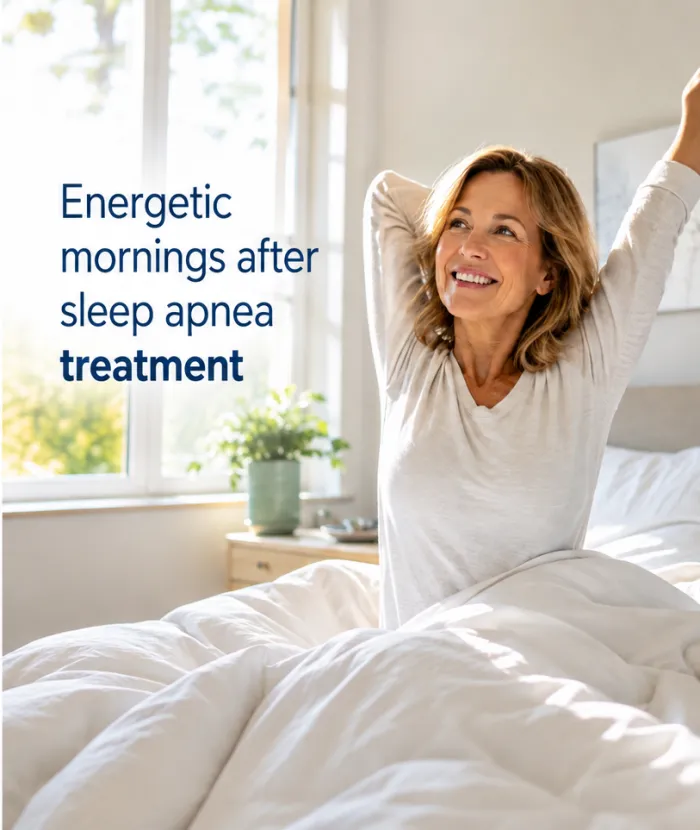

More energy in the morning — and through the whole day — is one of the most common benefits patients report after treatment.
Why this matters even if you'd never consider an implant
An implanted nerve stimulator is a meaningful surgical step, and it's not the right fit — or the first option — for most people with sleep apnea. What this study really highlights is the bigger picture: treating the airway problem, in whatever form makes sense for you, appears to protect the rest of your body too. That's a strong argument for getting screened sooner rather than later, long before surgery would ever be on the table.
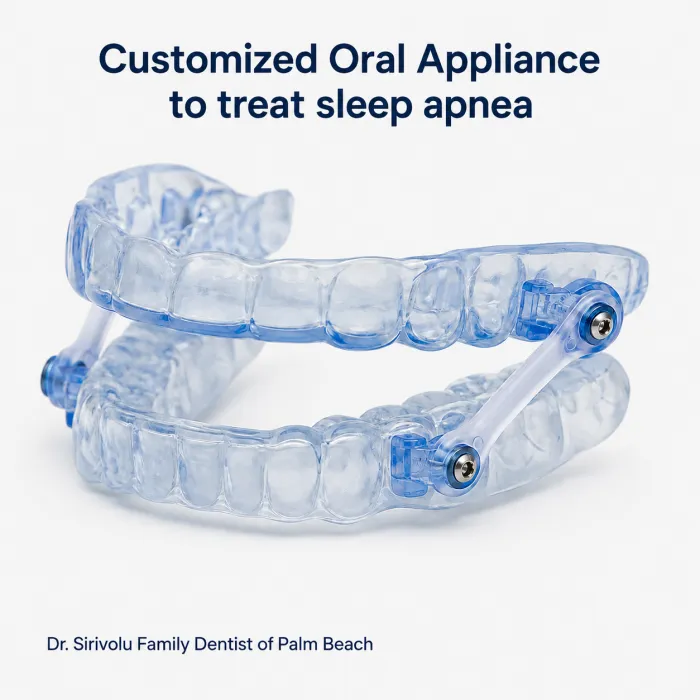
For a lot of patients, especially those with mild to moderate obstructive sleep apnea or anyone who's tried a CPAP machine and found it too noisy, bulky, or uncomfortable, a custom oral appliance is worth exploring first. It's a small, dentist-fitted device — similar in feel to a nightguard — that gently holds the jaw in a position that keeps the airway from collapsing overnight.
Signs worth mentioning at your next visit: loud or frequent snoring, waking up gasping or choking, morning headaches, a dry mouth on waking, or daytime fatigue that doesn't add up with how much sleep you're getting.
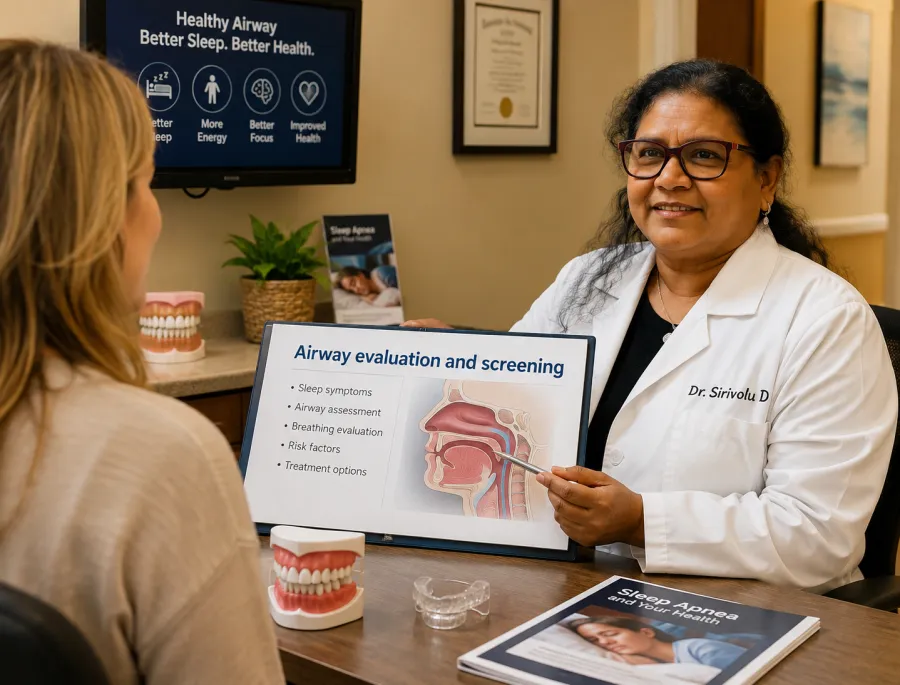
How a dental sleep screening works
An airway and sleep screening at our office starts with a conversation — about your snoring, your energy levels, and your sleep history — followed by an evaluation of your airway, jaw position, and bite. If your symptoms suggest sleep apnea, we'll help coordinate a physician-ordered sleep study to confirm a diagnosis and its severity. From there, we can talk through whether a custom oral appliance is a good fit, or whether a referral to a sleep physician makes more sense for your case.
Dentistry and sleep medicine work best as a team. We're not here to replace your physician or a sleep specialist — we're here to be the first, easiest conversation to have about it, and to build the appliance if that's the right next step for you.
Ready to talk about your sleep?
Ask us about airway and sleep apnea screening at your next visit, or call to schedule a consultation.
Frequently Asked Questions
Can a dentist treat sleep apnea?
Dentists can screen for signs of obstructive sleep apnea and provide custom oral appliance therapy — a device that repositions the jaw to help keep the airway open during sleep. It's often recommended for mild to moderate cases or for patients who can't tolerate CPAP, and a physician-ordered sleep study is used to confirm diagnosis and severity.
What did the new sleep apnea study find?
A 2026 study in JAMA Otolaryngology–Head & Neck Surgery from University of Chicago Medicine researchers found that patients treated for sleep apnea with a hypoglossal nerve stimulation implant had lower rates of new diabetes and high blood pressure diagnoses, starting more than two years after treatment, compared with untreated patients.
Is an oral appliance a good alternative to CPAP?
For many people with mild to moderate obstructive sleep apnea, or those who find CPAP uncomfortable, a custom-fitted oral appliance can be an effective, non-surgical alternative — smaller, quieter, and easier to travel with. Effectiveness varies by case, so it's worth a screening to see if you're a good candidate.
What are common signs of sleep apnea?
Loud or frequent snoring, gasping or choking awake during sleep, morning headaches, a dry mouth on waking, and daytime fatigue despite a full night's sleep are all common signs worth discussing with your dentist or doctor.
This article is for general educational purposes and isn't a substitute for medical diagnosis or advice. Sleep apnea should be diagnosed through a physician-ordered sleep study; talk with your dentist and physician about which treatment path is right for you. This is a general health topic — if you have concerns about your own symptoms, please reach out to your doctor.
Related: Sleep Apnea Treatment · All Services · Book a Consultation