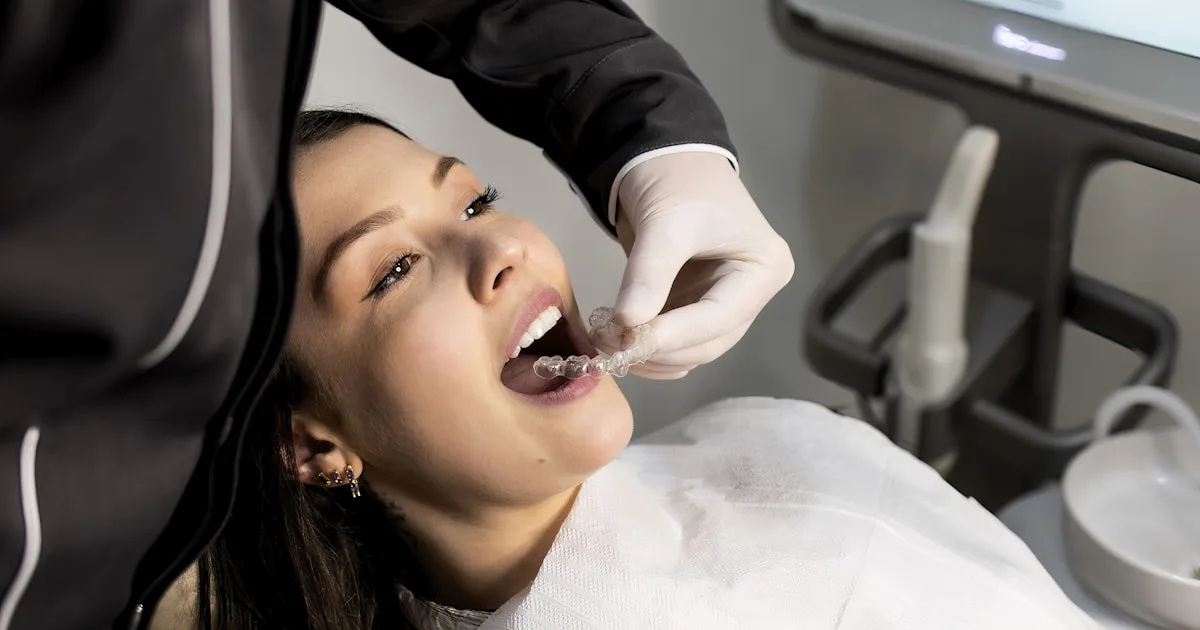
The single most common hesitation we hear about cosmetic work isn't the cost. It's uncertainty. What will I actually look like afterwards? For most of dentistry's history the honest answer involved a lot of trust, a wax model, and a description.
That's the part technology has genuinely changed. A recent feature in Dentistry Today by Dr. Todd Snyder walked through how intraoral scanning and AI-assisted planning are reshaping cosmetic workflows — and the through-line is that patients now get to see the plan before they agree to it.
What's replacing the goopy impression tray
If your last crown involved a tray of putty and several minutes of trying not to gag, you'll appreciate this one. An intraoral scanner is a small wand with a camera on the end. It's passed over your teeth and gums, and software assembles thousands of frames into a precise 3D model of your mouth in a few minutes.
The comfort improvement is the obvious win. The clinical ones matter more:
- Accuracy is verifiable on the spot. A distorted putty impression often isn't discovered until the lab work comes back wrong. A scan can be checked, and rescanned, while you're still in the chair.
- It goes to the lab electronically. No shipping, no physical model to distort in transit.
- It's a permanent baseline. Your scan can be compared against a future one to see whether a tooth is wearing, shifting, or receding.
- It's something you can look at. A 3D model of your own teeth, rotated on a screen, explains a problem far better than we can describe it.
Where AI actually fits in
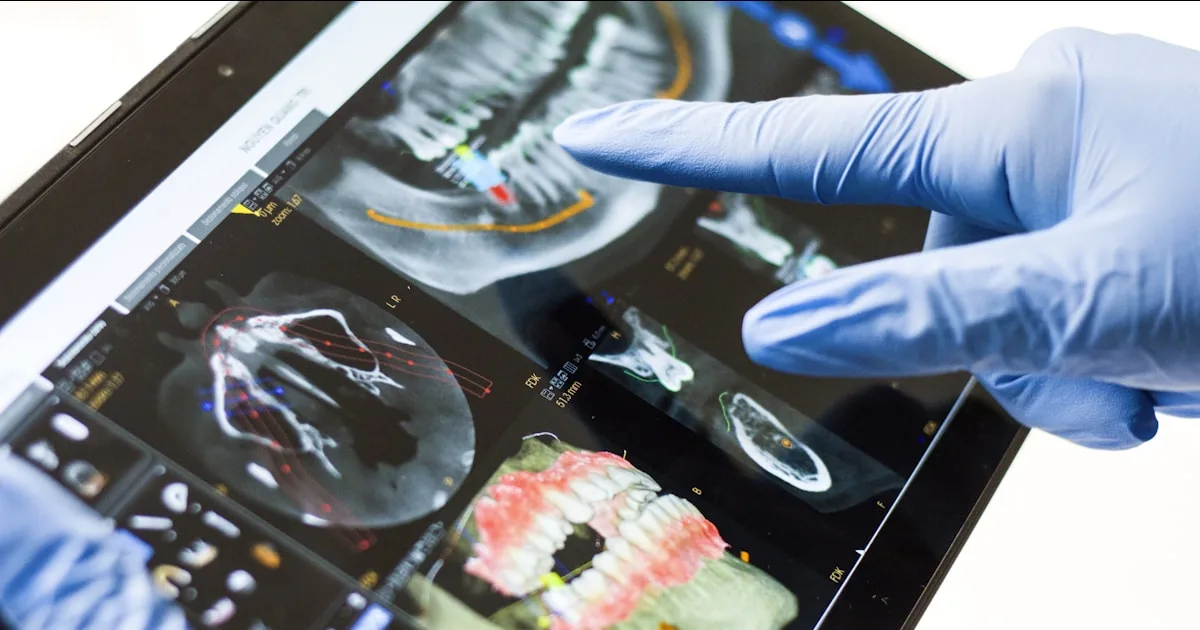
"AI dentistry" is doing a lot of marketing work at the moment, so it's worth being specific about what's real. In cosmetic planning, AI-assisted software is used to analyze the 3D scan and propose things like tooth proportions and symmetry relative to your face, generate a suggested design for the finished smile, and automate technical steps that used to be done by hand.
What it doesn't do is decide. Software can't assess your bite, judge your gum health, weigh how much enamel can safely be kept, or know what you want your smile to look like. Those are clinical and personal judgments. The useful framing is that AI is a drafting tool in the clinician's hands — it produces a starting proposal faster, and a dentist and technician then evaluate and revise it. Any practice describing AI as the designer rather than the tool is overselling it.
Why "minimally invasive" is the detail that matters most
Buried in the technology story is the part with the longest-term consequences: how much of your natural tooth gets removed.
Enamel doesn't grow back. Every millimeter removed to fit a restoration is gone permanently, and a tooth that's been heavily reduced is more likely to need more work later in life. So minimal-prep veneers — very thin porcelain requiring little or no reduction of the tooth — aren't just a cosmetic nicety. They're a decision about how much natural tooth you'll still have in twenty years.
Better planning supports that directly. When the design is settled digitally before any drilling, preparation can be planned to the minimum the design actually needs, rather than reduced generously to leave room for adjustment later.
The honest caveat: minimal-prep veneers aren't right for everyone. Teeth that are crowded, noticeably out of position, or already heavily restored usually need conventional preparation. Sometimes the genuinely more conservative plan is to straighten the teeth first with Invisalign and then place fewer, thinner restorations — or to skip restorations entirely and finish with whitening. Either way, the bite gets examined before the veneers get recommended — not after.
What we use at our Royal Palm Beach office today
Rather than gesture at "the latest technology," here's the specific list, so you know what to expect:
- Low-radiation digital X-rays and intraoral cameras, so you can see what we're looking at instead of taking our word for it.
- 3D imaging for implant and Invisalign planning.
- Digital scanning with a 3D outcome preview as part of the free Invisalign assessment — we scan your teeth and show you the projected finished position before you commit to anything.
- Digital impressions for crowns, bridges, and custom appliances.
If there's a specific technique you've read about and want, ask us at your consultation. We'd rather tell you plainly whether we do it than let a website imply we do everything.
Four questions worth asking before any smile makeover
- Can I see a preview of the result, and how is it produced? A digital design, a trial smile you can wear, and a verbal description are three very different levels of certainty.
- How much of my natural tooth will be removed? Ask for it in plain terms, per tooth. It should be a specific answer.
- Is there a more conservative way to get close to this result? Whitening, bonding, or straightening first may get you most of the way with far less removed.
- What's the maintenance and lifespan? Veneers and crowns are long-term commitments that eventually need replacing. Know the timeline before you start, not after.
The technology is genuinely better than it was five years ago. But it's in service of the same old question — is this the right treatment for this patient's teeth — and that still gets answered by an exam and a conversation.
Curious what your smile could look like?
Bring your questions to a free cosmetic consultation. We'll show you your options, the sequence, and written pricing before you decide anything.
Frequently Asked Questions
Can I see what my smile will look like before treatment starts?
In many cases, yes. A digital scan of your teeth builds a 3D model, and planning software can show a proposed result before any work begins. At our Royal Palm Beach office this is a routine part of an Invisalign assessment — we take a digital scan and show you a 3D preview of where your teeth are projected to finish. For veneers and crowns the preview method varies by case, so ask us what's possible for yours.
What is a digital dental impression?
Instead of filling a tray with putty and holding it in your mouth, we pass a small wand-shaped camera over your teeth and gums. Software stitches thousands of images into an accurate 3D model in a few minutes. It's more comfortable, avoids the gag reflex most people dislike, can be checked for accuracy on the spot, and travels to the dental lab electronically. We use digital impressions for crowns, bridges, and custom appliances.
Does AI design your veneers?
No. AI-assisted software can propose tooth proportions, suggest a design, and speed up technical steps, but a dentist makes the clinical decisions and finalizes the design. Software can't evaluate your bite, your gum health, how much enamel you can safely keep, or what you actually want your smile to look like. It's a drafting tool used by the clinician — not a replacement for one.
What are minimal-prep veneers?
Minimal-prep or no-prep veneers are very thin porcelain veneers needing little or no reduction of the natural tooth before bonding. The appeal is conservation — less healthy enamel removed permanently. They aren't suitable for every case: crowded teeth, teeth significantly out of position, or heavily restored teeth usually need conventional preparation, and sometimes straightening first is the more conservative route overall. It comes down to an exam.
What dental technology does your Royal Palm Beach office use?
Low-radiation digital X-rays, intraoral cameras so you can see what we see, 3D imaging for implant and Invisalign planning, digital scanning with a 3D outcome preview as part of the free Invisalign assessment, and digital impressions for crowns, bridges, and custom appliances. If a specific technique matters to you, ask us directly and we'll tell you plainly whether we do it.
This article describes technology and techniques used in cosmetic dentistry generally, and is for educational purposes rather than a treatment recommendation. What's appropriate for your teeth depends on an in-person exam and X-rays. Not every technique described here is right for every patient, and not every practice offers every one of them — ask your dentist what their specific workflow involves.
Related: Porcelain Veneers · Invisalign · Teeth Whitening · Dental Crowns · Book a Consultation